Filming a 1912 bungalow is a genuinely different job from filming a 2012 condo, and most of the differences aren't obvious until something goes wrong. If you own a period home in Pasadena, Altadena, or San Marino, these are the things worth understanding before you collect bids.
Old glass is not modern glass
Glass manufactured before the float process became standard in the sixties is thinner, less uniform in thickness, and often carries visible distortion — the gentle waviness that people love and that is genuinely part of the building's character. It's also more fragile, and after a century in a putty-glazed sash it may be under stress you can't see.
This matters for film in two ways. Handling risk goes up sharply: a crew accustomed to modern windows applies pressure that original glazing doesn't tolerate. And thermal behaviour differs, because thinner, older glass with existing micro-flaws has less margin before a stress crack propagates from one of them.
The single-pane exception to the usual warning
Most of what you'll read about film and thermal stress concerns dual-pane units, where heat trapped in the cavity raises the outer lite's temperature. Original single-pane glazing doesn't have that problem — there's no cavity — which is why it's generally more forgiving of film, not less.
The complication is that few period houses are still entirely original. A sixties addition, an eighties kitchen remodel, and a recent primary suite may have introduced two or three other glazing types into the same building. We survey each opening rather than assuming the house is one thing, because a blanket spec across mixed glazing is how a pane ends up cracked.
Where film shouldn't go
There are windows we'd advise leaving alone, and any installer who won't name any is worth being wary of:
- Leaded and art glass panels — the came structure and the varied glass thicknesses make film a poor and risky fit.
- Glazing that is already cracked, chipped, or loose in the sash, until it's repaired.
- Panes with failed or missing glazing putty, where the film's tension can act on an unsupported edge.
- Very small divided lites, where the film's edge-to-glass ratio is high and the visual result is rarely worth it.
On divided-light windows in particular, the honest answer is often that the labour cost per square foot of glass treated is disproportionate. We'll say so.
Design review and what it actually regulates
If you're in a landmark district or a historic overlay, the concern is the appearance of the building from the public right of way. Interior-applied film that doesn't change exterior reflectivity generally doesn't register as an alteration at all, which is why it's a common solution on properties where window replacement would be a fight.
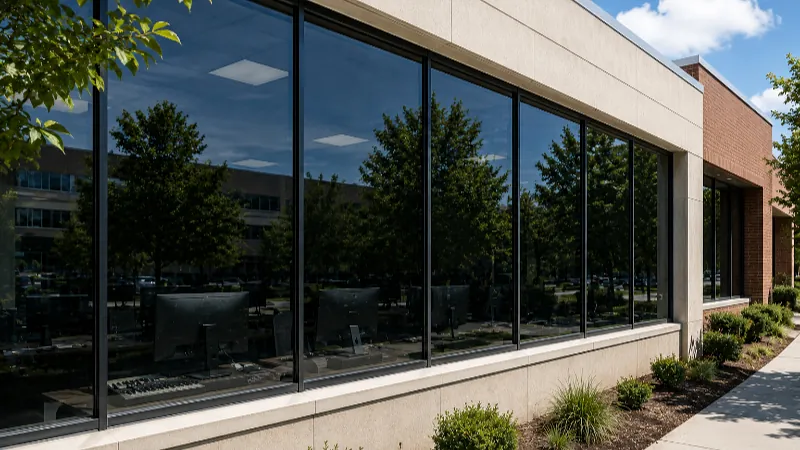
What causes problems is reflectivity. A metallised or dual-reflective product can make windows read as mirrors from the street, which is visible, is an alteration in character, and does get noticed. Ask for the exterior visible reflectance figure in writing before approving any film on a street-facing elevation.
The upside nobody mentions
There's a genuine benefit here beyond comfort and fade. Safety film on original glazing is a containment measure for glass that is effectively irreplaceable — in a seismic event or an impact, a filmed pane cracks and stays in the sash instead of falling out and being gone.
For homeowners with original wavy glass, that argument often carries more weight than the energy one. If you'd like a survey that treats your glazing as something to preserve rather than something to cover, ask for a free assessment and we'll walk the house with you.